Planning Tips, Uncategorized, Wedding and Event Trends, Wedding Planning Tips
Top 12 Wedding Trends for 2026: A Shift Toward Intimate Celebrations
Top 12 Wedding Trends for 2026: Key Points
- Weddings in 2026 prioritize intention and personalization over tradition.
- Smaller guest lists and micro weddings remain a leading trend.
- Minimal decor and cinematic lighting create impact with fewer elements.
- Bold colors and statement fashion reflect personal style.
- Multi-day wedding weekends offer a more relaxed guest experience.
- Weekday and at-home weddings provide flexibility and cost savings.
- Livestreams and social content help include guests who can’t attend.
Introduction
In 2026, weddings are all about intention and personalization. Couples are rethinking guest lists, timelines, and traditions to create celebrations that feel unique, personal, and relaxed. Instead of following a one-size-fits-all formula, weddings are becoming more thoughtful, immersive, and reflective of the couple themselves.
From intimate micro weddings to multi-day wedding weekends and bold design choices, these shifts are shaping a new era of modern celebrations. Below, we’re breaking down the top 12 wedding trends for 2026 — and what they look like in real weddings.
1. Micro Weddings
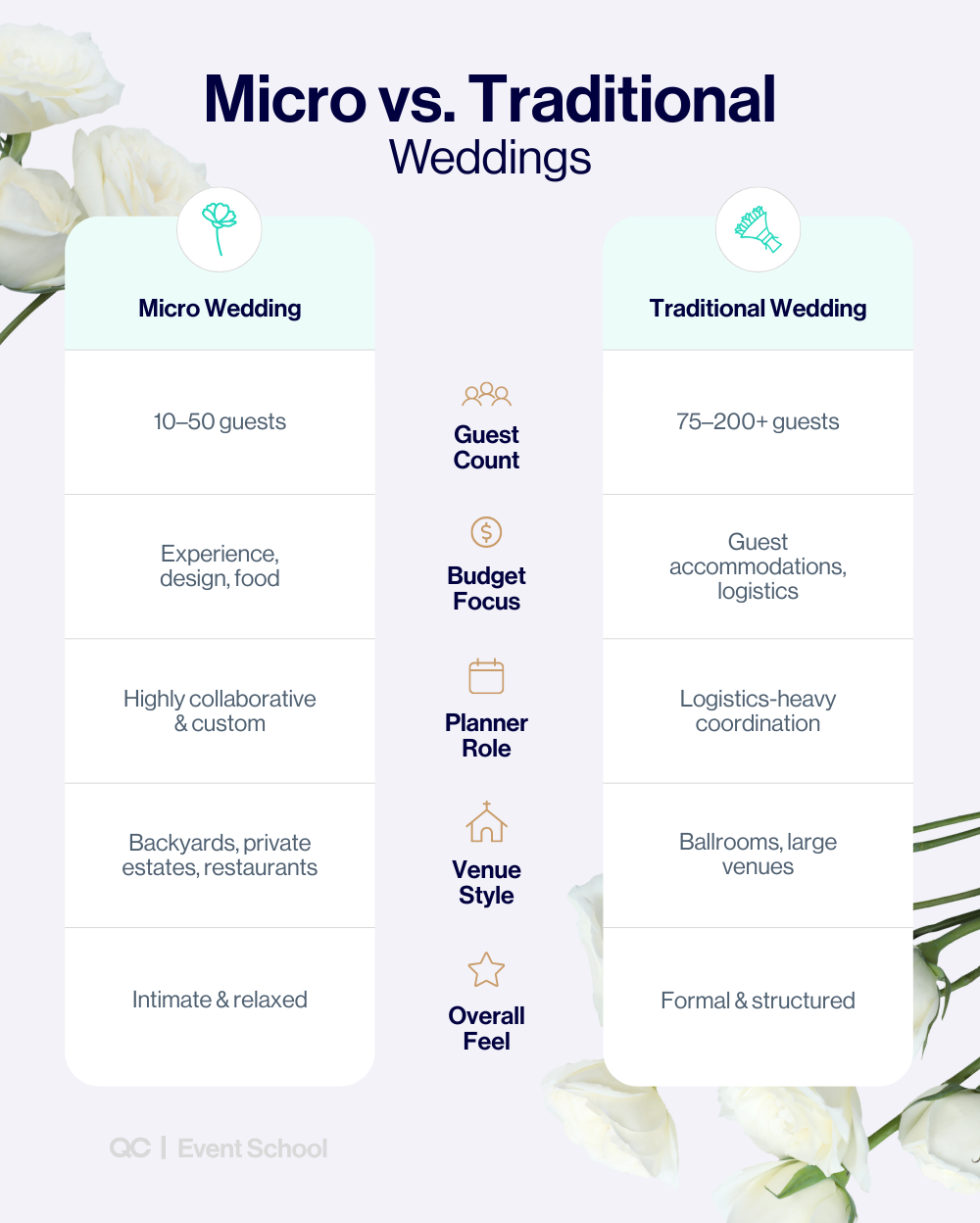
Micro weddings continue to be one of the most influential wedding trends for 2026, with couples intentionally choosing smaller guest lists to create more meaningful, personalized celebrations. Rather than feeling like a scaled-down version of a traditional wedding, micro weddings allow couples to focus on quality — from elevated food and beverage experiences to intentional design and unique venues.
With fewer guests to host, couples often gain more flexibility in how they allocate their budget, shifting spend toward experience-driven elements rather than logistics. For planners, micro weddings create space for deeper collaboration and creativity, allowing timelines, layouts, and details to be thoughtfully curated from start to finish. In 2026, micro weddings aren’t about doing less — they’re about doing what matters most, with intention.
2. Minimalist Wedding Decor
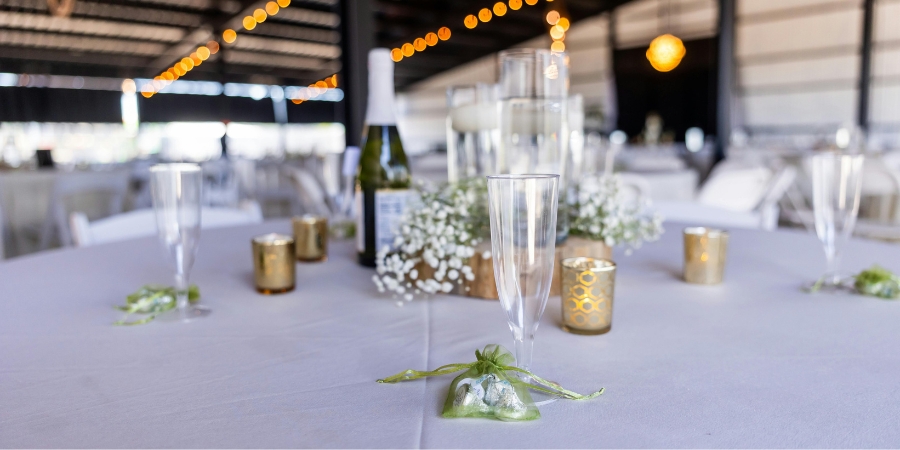
In 2026, minimalist wedding decor is becoming more popular as couples focus on intentional, clean design. Instead of filling a space with lots of decorations, couples are choosing fewer details that make a bigger impact. The goal is a look that feels modern, thoughtful, and uncluttered.
This often means one large floral arrangement at the ceremony, simple table settings with fewer centerpieces, or soft lighting that creates atmosphere without overwhelming the space. For planners and designers, minimalist wedding decor is about helping couples choose the right details — not more details — so everything feels cohesive and well-planned.
💚 Become a Professional Event Decorator
Get fully trained and internationally-certified in as little as 3 short months!
3. Bold Wedding Color Choices
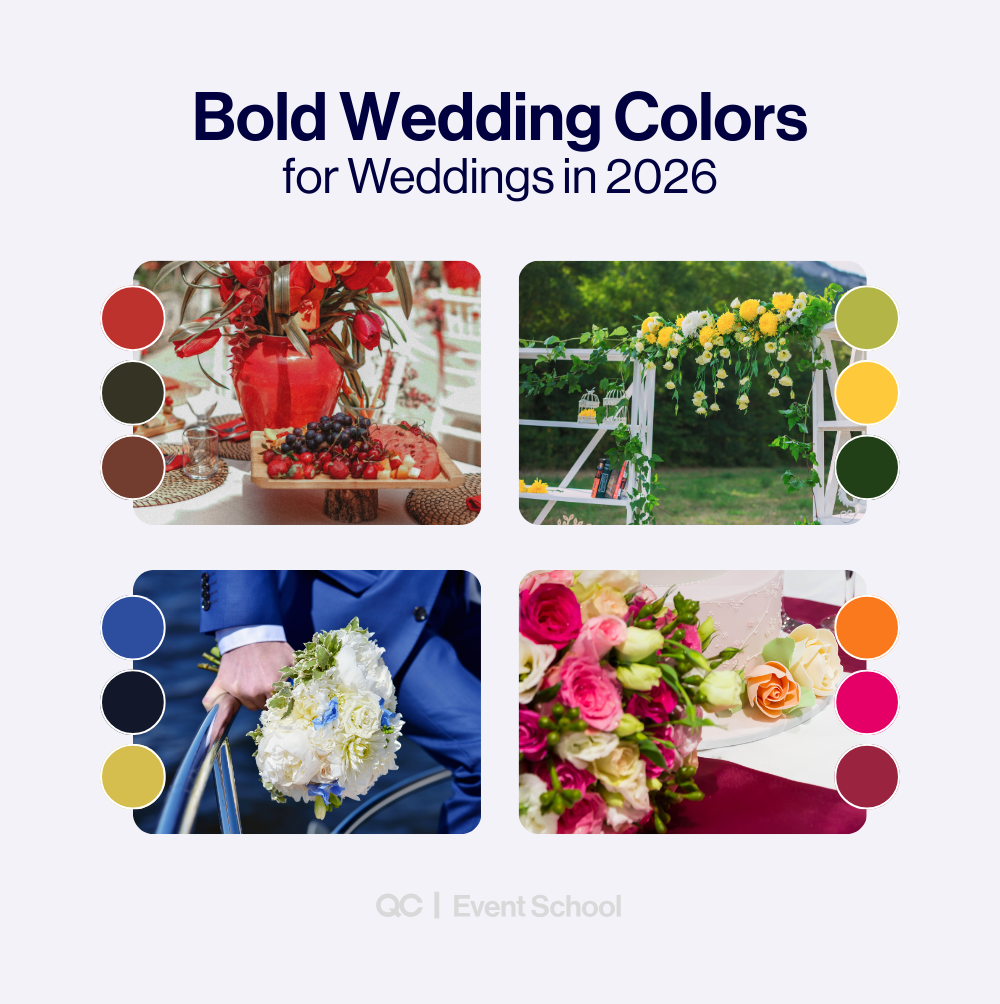
Wedding color palettes in 2026 are becoming more expressive and less predictable. Instead of sticking to all-neutral tones, couples are choosing colors that feel personal and bring energy into their wedding design. Think richer hues, warmer tones, and colors that feel intentional rather than safe.
These bold color choices often show up through linens, florals, stationery, or accent details, rather than overwhelming the entire space. For planners and designers, this trend is about helping couples use color in a balanced way — adding personality while still keeping the overall look cohesive and timeless.
4. Multi-Day Wedding Celebrations
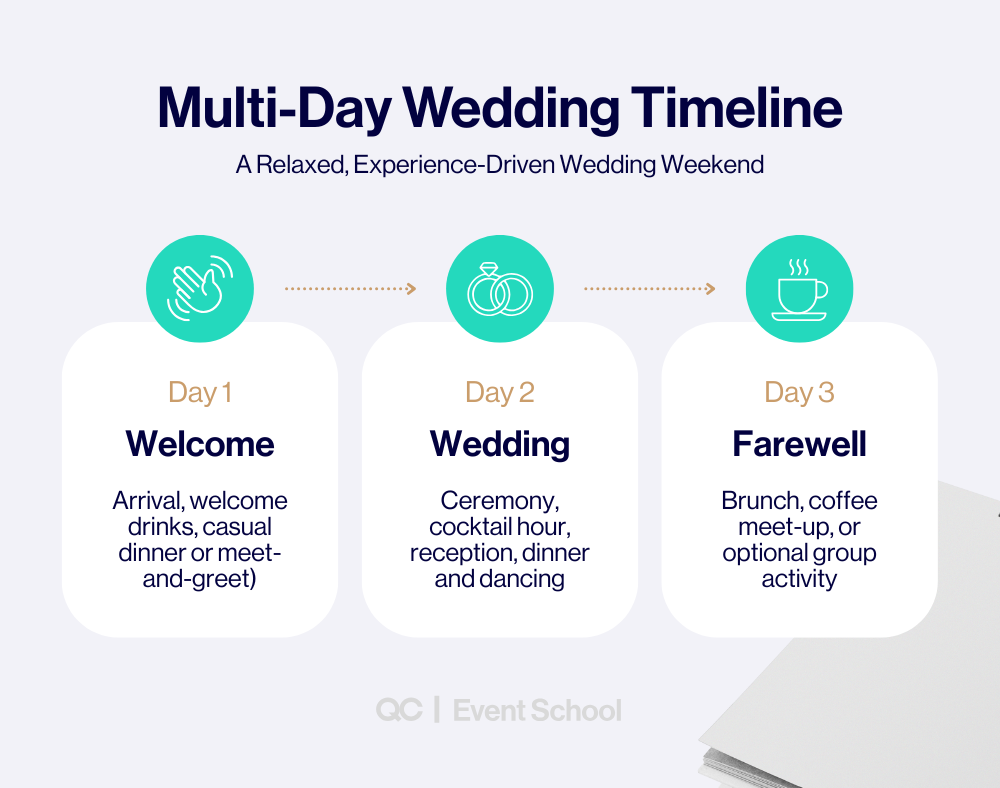
In 2026, more couples are choosing multi-day wedding celebrations instead of trying to fit everything into a single day. By spreading events across a weekend, the celebration feels more relaxed and gives guests time to connect, enjoy the setting, and be fully present for the wedding itself.
For planners, multi-day weddings create space to design a thoughtful flow from start to finish. Each day has its own purpose — welcoming guests, celebrating the marriage, and ending on a comfortable, casual note — while still feeling connected as one experience. This approach reflects a larger shift toward weddings that feel intentional and guest-focused.
5. Non-Traditional Wedding Receptions
In 2026, wedding receptions are becoming less structured and more flexible. Couples are moving away from rigid timelines and formal expectations in favor of receptions that feel social, relaxed, and easy for guests to enjoy.
Rather than following a strict order of events, non-traditional receptions are designed to flow more naturally throughout the evening. For planners, this means shifting the focus from managing moments to managing movement, energy, and pacing.
What this trend looks like in practice:
- Less emphasis on assigned seating and formal table arrangements
- Alternative meal styles instead of a traditional plated dinner
- Fewer scripted announcements and interruptions
- Open timelines that allow guests to mingle freely
- A stronger focus on atmosphere over formality
6. Backyard & At-Home Weddings
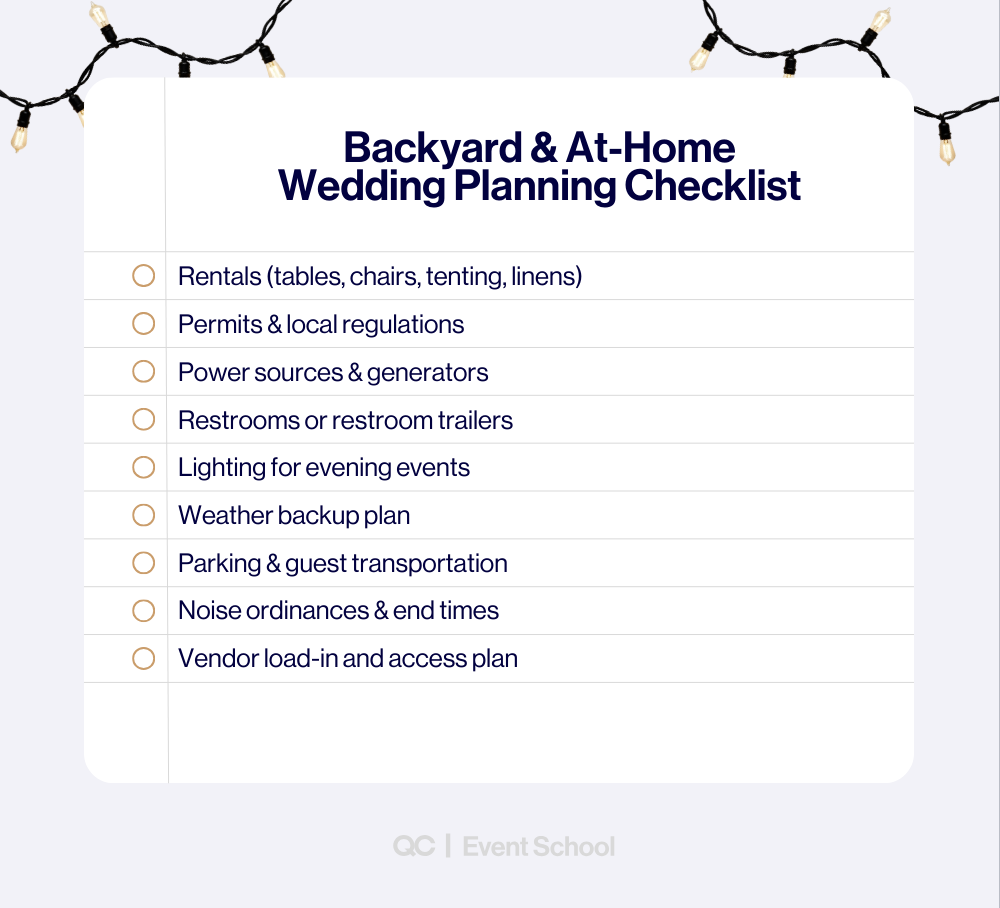
Backyard and at-home weddings continue to grow in 2026 as couples look for more personal, flexible ways to celebrate. Hosting a wedding at a private home or family property is a cost-effective alternative that allows couples to create a setting that feels meaningful and relaxed.
While these weddings feel intimate and casual on the surface, they often require more coordination behind the scenes. For planners, backyard and at-home weddings involve managing logistics that venues usually handle — turning a private space into a fully functional event while keeping the experience seamless for guests.
7. Sustainable & Eco-Friendly Weddings
Sustainable weddings continue to trend in 2026. Couples are prioritizing decisions that reduce waste while still allowing their wedding to feel thoughtful, stylish, and personal.
For planners, sustainability often shows up naturally during the planning process — through fewer rentals, simplified design, and working with local vendors. These choices not only support the environment but can also streamline logistics and improve the overall guest experience.
What sustainable weddings look like in 2026:
- Using fewer decor items and repurposing them throughout the day
- Choosing local vendors to reduce transportation and shipping
- Opting for digital invitations or minimal paper goods
- Designing with longevity in mind instead of single-use details
- Planning smaller or more intentional celebrations that naturally create less waste
This approach allows sustainability to feel integrated rather than forced, aligning with many of the other wedding trends shaping 2026.
8. Statement Wedding Fashion
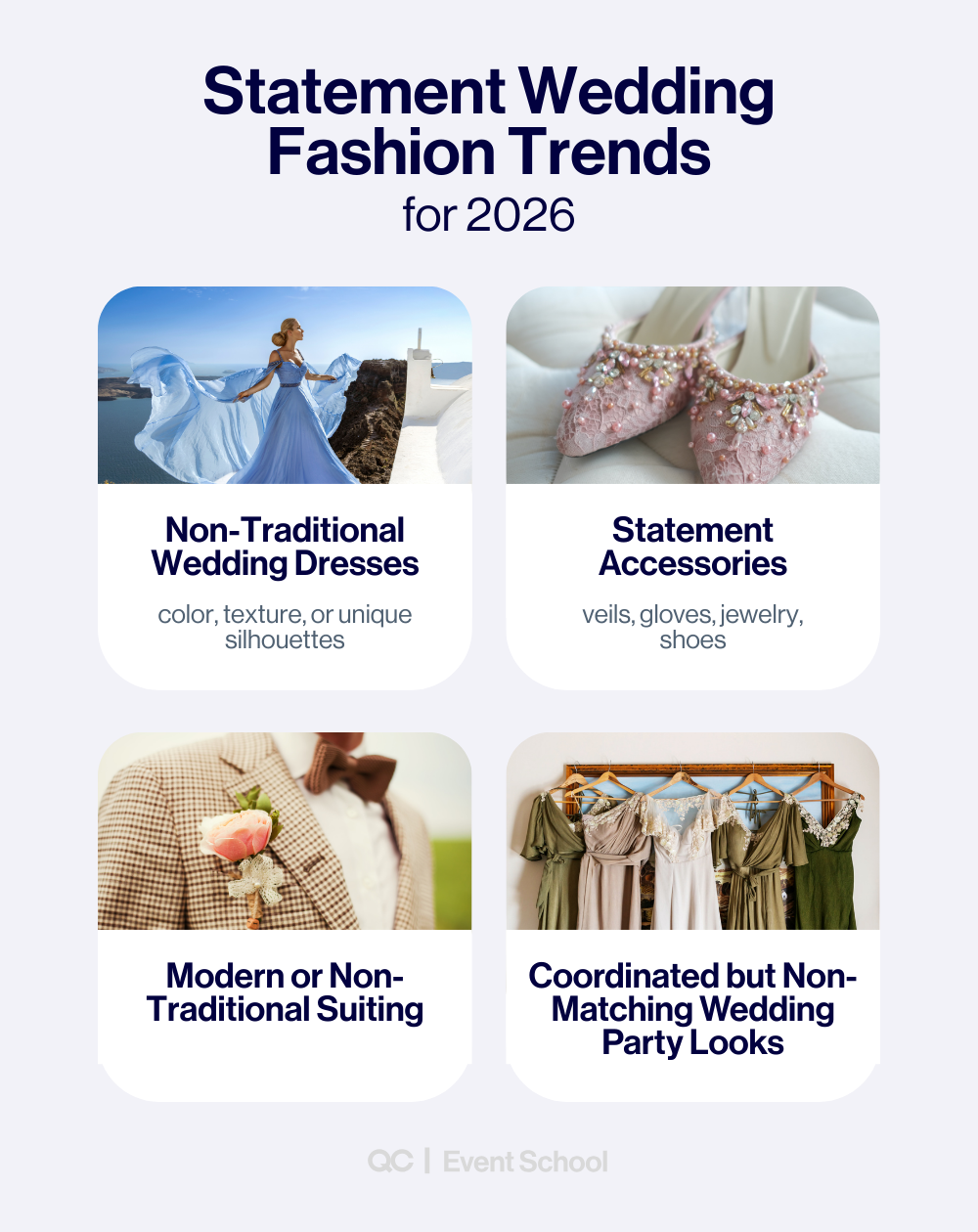
Wedding fashion in 2026 is less about tradition and more about personal style. Couples are choosing looks that feel intentional and expressive, using fashion as a way to reflect their personalities and the overall feel of their wedding.
This trend shows up across bridal, partner, and wedding party attire — from non-traditional silhouettes and unexpected fabrics to bold accessories and modern suiting. Rather than aiming for a uniform look, couples are embracing fashion choices that feel authentic and visually impactful.
9. Weekday Weddings
Weekday weddings are becoming increasingly popular in 2026 as couples seek flexible, cost-conscious alternatives to traditional weekend dates. Choosing a weekday often opens up more venue availability and can make it easier to book in-demand vendors for less.
Beyond logistics, weekday weddings also encourage a more intentional guest list and a relaxed overall atmosphere. Whether it’s a Thursday evening celebration or a Monday courthouse ceremony followed by dinner, weekday weddings reflect a shift toward practicality and prioritizing what works best for the couple.
This trend is especially appealing for smaller weddings, destination-style celebrations, and couples who value flexibility over tradition.

“QC Event School has been everything I was looking for! The biggest thing that makes them stand out is their community. They encourage collaboration and learning from others, alongside your personal experience. QC Event School does its duty to help event professionals from all over the world!”
Carissa Corsi
Event & Wedding Planning, Event Decor, and Luxury Wedding & Planning Student

10. Cinematic Wedding Lighting
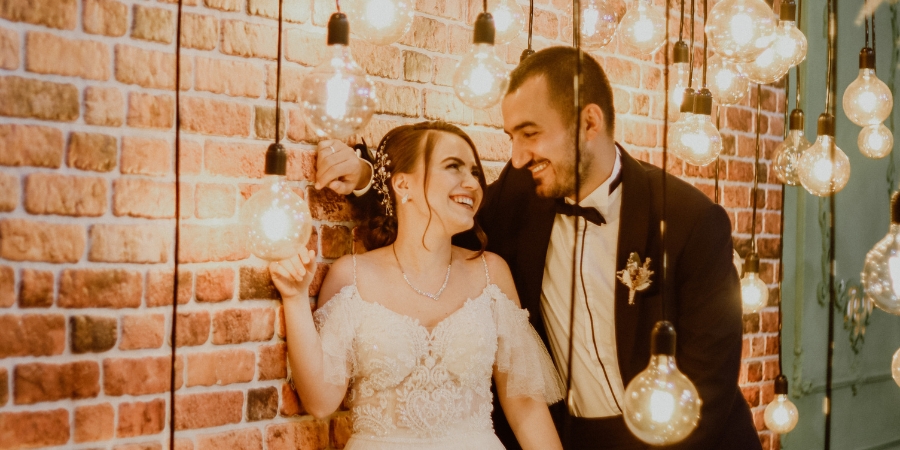
Cinematic wedding lighting in 2026 is about using lighting as a design feature. Instead of basic overhead lights, couples are using lighting to shape the mood, highlight key areas, and add visual interest to the space, often replacing or enhancing traditional decor.
In many weddings, lighting now does the work that decor used to do. A room can feel warm, dramatic, or intimate largely because of how it’s lit, even with minimal florals or rentals.
What cinematic wedding lighting looks like in real weddings:
- Candles used in large groupings to create warmth and atmosphere
- String lights or café lights overhead to define the reception space
- Soft uplighting on walls, trees, or architectural features
- Pin lighting to spotlight tables, florals, or the dance floor
- Draped fabric or installations lit from behind for a dramatic effect
Rather than adding more decor, couples are using lighting to transform the space itself — especially for evening receptions or tented and outdoor weddings.
11. Wedding Content Creators & Social Media Coverage
In 2026, more couples are thinking about how their wedding is captured and shared in real time. Beyond traditional photography and videography, there’s a growing focus on social-first content — short videos, behind-the-scenes moments, and clips designed to be shared quickly with friends and family.
This trend is less about replacing photographers and more about documenting the day in a different way. Content creators often focus on candid moments, phone-style video, and same-day highlights that feel natural and unpolished — similar to what couples see on TikTok and Instagram.
What this looks like:
- Short-form vertical videos captured throughout the day
- Behind-the-scenes moments during getting ready or cocktail hour
- Same-day clips shared on social media or with guests
- Casual, candid footage that complements professional photos
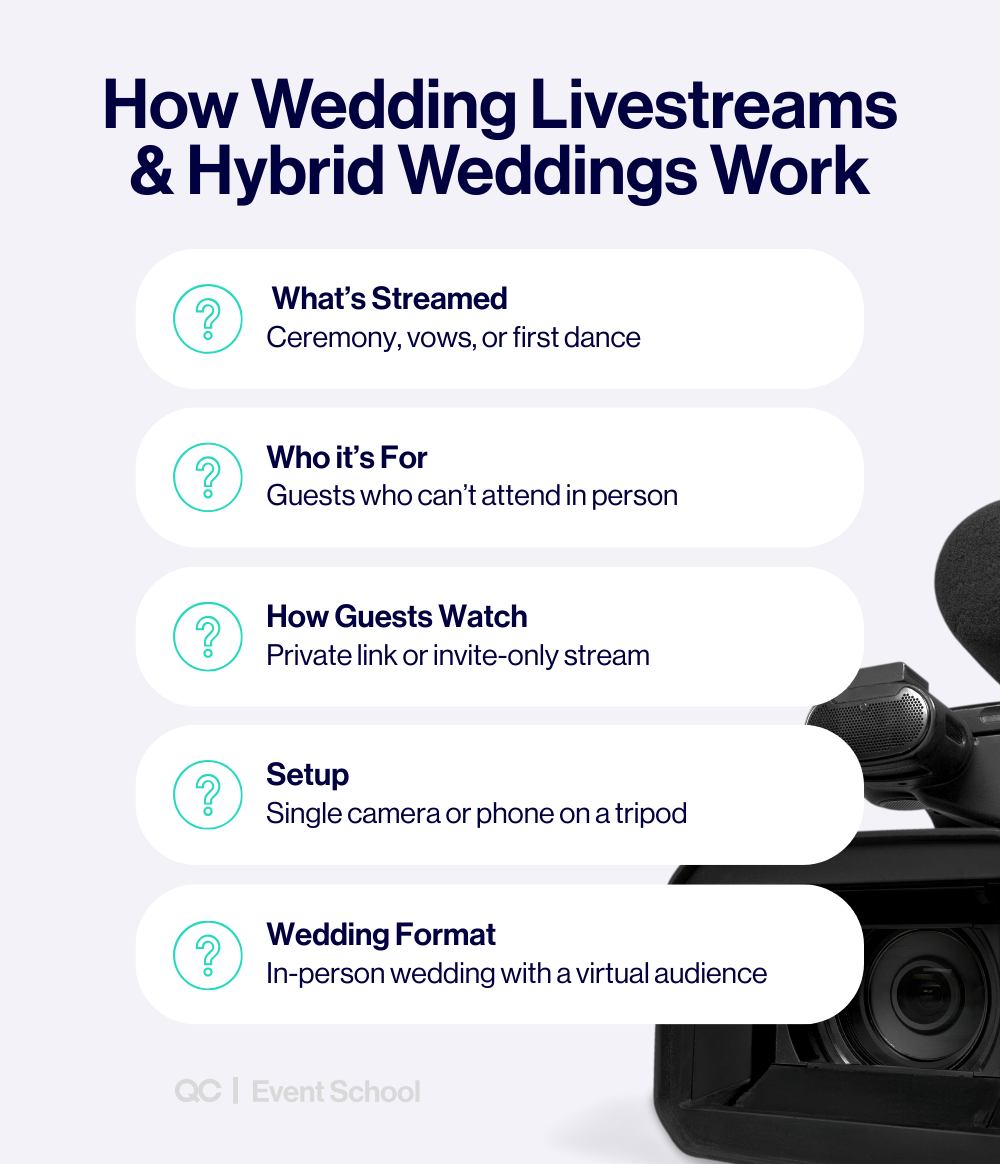
12. Wedding Livestreams & Hybrid Weddings
Wedding livestreams and hybrid weddings are becoming more common in 2026 as couples look for ways to include guests who can’t attend in person. Rather than hosting fully virtual weddings, couples are selectively livestreaming key moments while keeping the main celebration in person.
This trend is about access, not replacing the wedding experience. Couples are using livestreams so distant relatives, elderly family members, or international guests can still witness meaningful moments without changing the feel of the day.
In most cases, only specific parts of the wedding are shared — keeping the celebration intimate for those attending while still allowing others to feel included.
How to Plan a Wedding in 2026
Wedding trends for 2026 show a clear shift toward more intentional, flexible, and personal celebrations. From backyard and weekday weddings to modern lighting and hybrid options, couples are choosing what fits their priorities — not what’s expected.
Want to Plan with Confidence?
Whether you’re planning your own wedding or exploring a career in wedding planning, understanding how events are built from the inside can help you make smarter decisions and avoid unnecessary costs. Our Event & Wedding Planning course teaches the real-world skills behind successful weddings — from timelines to vendor coordination.
Wedding Trends 2026 FAQs
What are the wedding trends for 2026?
Wedding trends for 2026 focus on more personal, flexible celebrations, including smaller guest lists, relaxed receptions, and experience-driven design choices.
Are micro weddings still popular in 2026?
Yes, micro weddings remain popular in 2026 as couples prioritize intimacy, meaningful experiences, and intentional planning.
Are weekday weddings a trend in 2026?
Weekday weddings are becoming more common in 2026 due to better venue availability and increased flexibility for couples.
What wedding traditions are couples skipping in 2026?
Many couples are skipping rigid seating charts, overly formal reception timelines, and traditions that don’t feel personal to them.
How are couples saving money on weddings in 2026?
Couples are saving money through smaller guest lists, weekday weddings, backyard celebrations, and more flexible planning choices.
Are wedding livestreams still popular?
Yes, wedding livestreams are still used in 2026, mainly to include guests who can’t attend the ceremony in person.
Do couples still follow wedding trends?
Most couples use wedding trends as inspiration and adapt them to fit their personal style, budget, and priorities.
🎉 Start Your Event Planning Career
Enroll today and book your first paying client in as little as 12 weeks!


The 2026 wedding landscape is shifting toward intentional, intimate celebrations featuring minimal décor, personalized experiences, and sustainable planning, moving away from rigid traditions. This trend highlights the growing importance of mindful, zero-waste choices that prioritize both guest experience and environmental impact. For those looking to implement these eco-friendly, intimate trends, Green Myna(https://www.greenmyna.com/) offers specialized sustainable event planning and consultation.