
How to Become an Event Manager: Roles, Skills & Career Path
If you’ve ever wondered what it really takes to become an event manager, you’re not alone. From high-profile corporate events to unforgettable weddings, event managers are the driving force behind experiences people remember for years.
In this guide, you’ll discover what an event manager actually does, the skills that set top professionals apart, and how to start building your career in event management.
Let’s get started.
What Is an Event Manager?
Event management is the process of planning, organizing, and executing events from start to finish. It involves coordinating logistics, managing budgets, securing vendors, overseeing timelines, and ensuring every detail aligns with the event’s overall vision. From corporate conferences and trade shows to weddings and large-scale festivals, event management blends creativity with strategy.
An event manager is the professional responsible for overseeing that entire process. They lead the planning, manage contracts and suppliers, monitor expenses, coordinate teams, and supervise on-site execution. While others may contribute to design or client communication, the event manager ensures all moving parts come together seamlessly.
In short, event managers turn ideas into fully realized experiences — on time, on budget, and without chaos.
What Does an Event Manager Do?
So, what does an event manager do on a day-to-day basis?
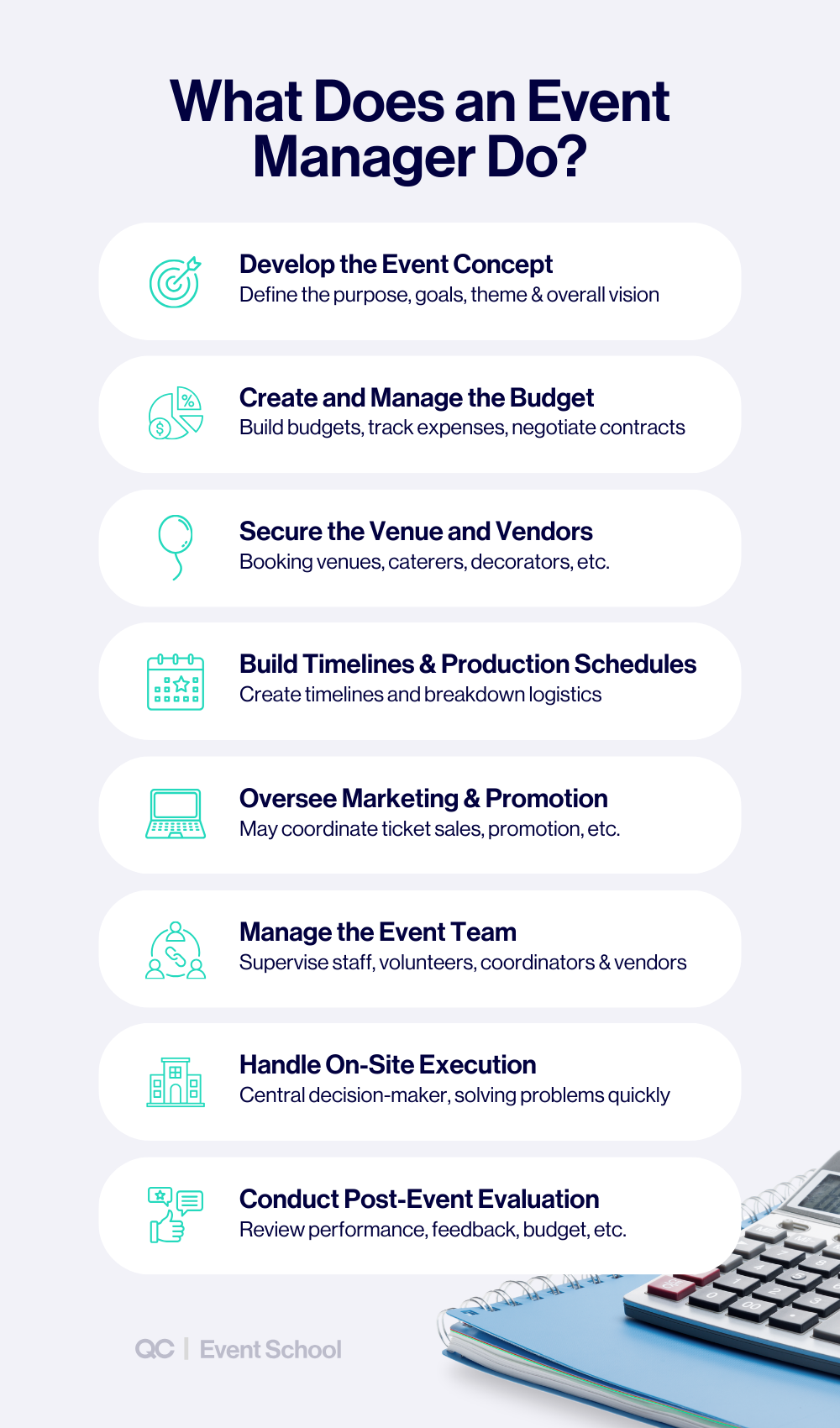
An event manager oversees every stage of an event — from the initial concept to post-event wrap-up. Their role combines strategic planning, budgeting, coordination, and on-site leadership to ensure everything runs smoothly.
Here are the core event management roles and responsibilities:
1. Develop the Event Concept
Event managers work with clients or stakeholders to define the purpose, goals, theme, and overall vision of the event.
2. Create and Manage the Budget
They build detailed budgets, track expenses, negotiate vendor contracts, and ensure the event remains financially viable.
3. Secure the Venue and Vendors
This includes booking venues and coordinating caterers, decorators, photographers, entertainment, audio-visual teams, and other suppliers.
4. Build Timelines and Production Schedules
Event managers create structured timelines outlining setup, rehearsal, event flow, and breakdown logistics.
5. Oversee Marketing and Promotion (When Applicable)
For public events, they may coordinate ticket sales, social media promotion, sponsorships, or partnerships.
6. Manage the Event Team
They supervise staff, volunteers, coordinators, and vendors — ensuring everyone understands their roles.
7. Handle On-Site Execution
On event day, the event manager is the central decision-maker, solving problems quickly and keeping everything on track.
8. Conduct Post-Event Evaluation
After the event, they review performance, gather feedback, assess budget outcomes, and document lessons learned.
In short, an event manager is both the strategist and the operator — responsible for turning a detailed plan into a seamless, memorable experience.
💚 Become a Certified Event Professional
Get fully trained and internationally-certified in as little as 3 short months!
Event Manager vs Event Planner vs Event Coordinator: What’s the Difference?
The terms event manager, event planner, and event coordinator are often used interchangeably — and in many real-world settings, responsibilities overlap.
However, there are distinctions between these roles, particularly in larger organizations or corporate environments.
Event Manager
An event manager typically oversees the operational and logistical execution of an event. Their focus is on strategy, budgets, contracts, timelines, and overall coordination.
Common responsibilities include:
- Creating and managing budgets
- Negotiating vendor contracts
- Securing venues
- Developing timelines and production schedules
- Managing risk and contingency planning
- Leading on-site execution and decision-making
Event Planner
An event planner focuses on shaping the event experience while often managing many of the same logistical components. In entrepreneurial and small-business settings, planners frequently oversee budgets, vendor coordination, and event-day execution — making the role highly versatile.
Event planners typically handle:
- Concept development and theme design
- Client consultations
- Vendor sourcing and coordination
- Budget planning
- Timeline organization
- Event-day oversight
For professionals who want creative involvement and the flexibility to run their own business, event planning offers a dynamic and rewarding career path.

“QC Event School has been everything I was looking for! The biggest thing that makes them stand out is their community. They encourage collaboration and learning from others, alongside your personal experience. QC Event School does its duty to help event professionals from all over the world!”
Carissa Corsi
Event & Wedding Planning, Event Decor, and Luxury Wedding & Planning Student

Event Coordinator
An event coordinator supports planners or managers by assisting with administrative tasks and event-day logistics. This role is often considered entry-level and provides valuable hands-on experience in the industry.
Responsibilities may include:
- Confirming vendor schedules
- Managing timelines
- Assisting with setup and breakdown
- Coordinating guest logistics
- Supporting on-site operations
The Reality: Roles Often Overlap
In large corporations, these roles may be clearly separated. But in many event businesses — especially weddings and private events — one professional may perform all three functions.
That’s why comprehensive event planning training often includes budgeting, vendor management, logistics, and on-site coordination — preparing professionals to confidently manage every stage of an event.
Event Management & Event Planning Skills You Need to Succeed
Whether you pursue a career as an event manager or event planner, success in this industry requires a combination of strategic thinking, creativity, and leadership. While responsibilities may vary, the core skill set is largely the same.
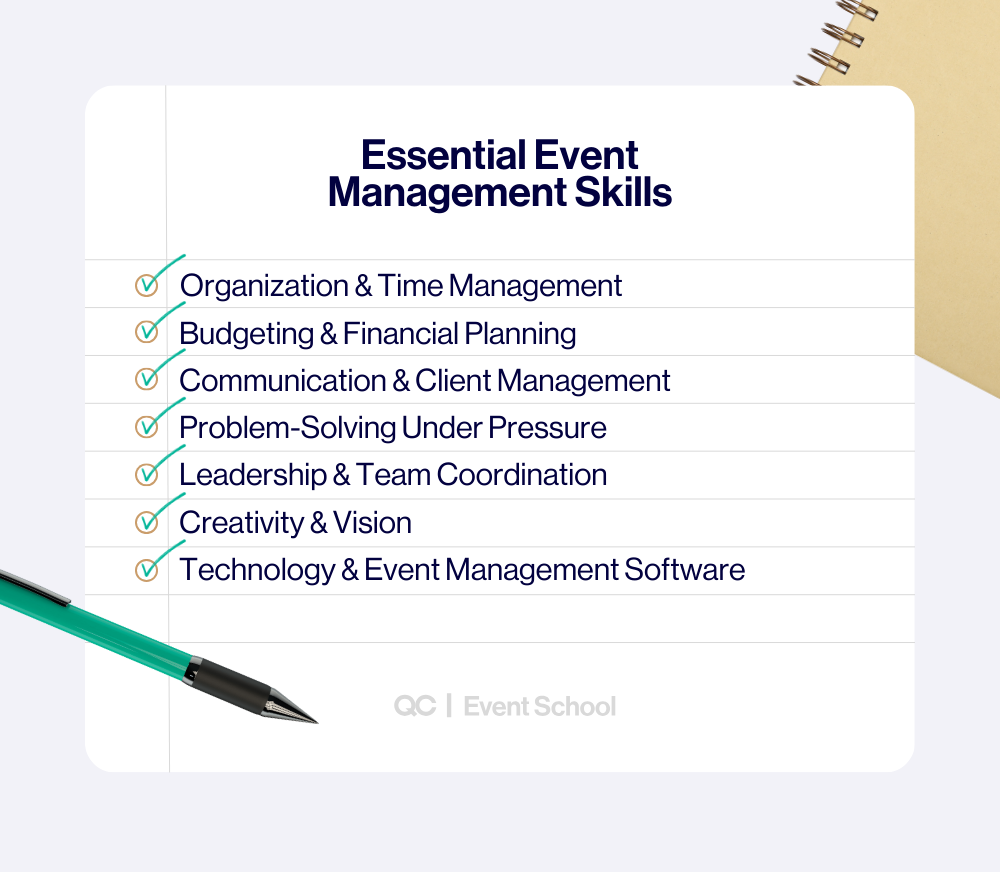
Here are the essential event management skills every professional should develop:
1. Organization & Time Management
Events involve countless moving parts — vendors, venues, timelines, contracts, and client expectations. Strong organizational skills ensure nothing falls through the cracks and deadlines are consistently met.
Successful professionals rely on structured planning systems, checklists, and project management tools to stay ahead.
2. Budgeting & Financial Planning
Understanding how to create, manage, and protect a budget is critical. Event professionals must estimate costs accurately, negotiate contracts, track expenses, and ensure profitability.
Financial oversight separates hobbyists from professionals.
3. Communication & Client Management
Clear communication is at the heart of event management. You’ll coordinate with vendors, venues, clients, sponsors, and team members — often simultaneously.
Active listening, professional email etiquette, and confident negotiation skills are essential.
4. Problem-Solving Under Pressure
No matter how well an event is planned, unexpected challenges happen — weather delays, vendor cancellations, technical issues, or timeline disruptions.
Event managers and planners must think quickly, stay calm, and implement solutions in real time.
5. Leadership & Team Coordination
From coordinators to catering staff, event professionals lead teams. Strong leadership ensures everyone understands their responsibilities and works toward a shared goal.
On event day, confidence and decisiveness matter.
6. Creativity & Vision
Especially in event planning, creativity plays a major role. Designing experiences that feel cohesive, memorable, and personalized requires both imagination and strategic execution.
Creativity isn’t just décor — it’s problem-solving with style.
7. Technology & Event Management Software
Modern events rely on digital tools for project management, budgeting, ticketing, and communication. Familiarity with event management software helps streamline processes and increase efficiency.
Professionals who embrace technology gain a competitive edge.
Why Professional Training Matters
While some skills develop through experience, structured training accelerates growth. Learning industry best practices, budgeting frameworks, contract management, and vendor coordination techniques builds confidence — especially when launching a business or managing high-budget events.
Programs like those offered at QC Event School are designed to provide that foundation, combining practical event planning knowledge with real-world business training.
How to Become an Event Manager: Step-by-Step Guide
If you’re serious about becoming an event manager, the good news is there isn’t just one path into the industry. With the right training and experience, you can build a career in corporate events, weddings, private celebrations, or even start your own event business.
Here’s how to get started.
Step 1: Get Professional Training
While some people enter the industry through hospitality or internships, structured education gives you a major advantage.
Professional training teaches you:
- Budget creation and financial management
- Vendor contracts and negotiations
- Timeline development
- Risk management and contingency planning
- Client communication strategies
- Business fundamentals for launching your own company
Certification builds credibility — especially if you plan to work independently or start your own event planning business.
Step 2: Gain Hands-On Experience
Even with training, real-world experience matters.
You can:
- Volunteer at local events
- Assist established planners
- Work at venues or hotels
- Join event production teams
Experience builds confidence and helps you develop problem-solving skills under pressure.
Step 3: Build a Portfolio
Document every event you work on — even small ones.
Include:
- Photos
- Budget samples
- Vendor lists
- Client testimonials
- Event timelines
A strong portfolio demonstrates professionalism and builds trust with potential clients or employers.
Step 4: Choose Your Career Path
Event managers work in many settings:
- Corporate event departments
- Event agencies
- Hospitality and venue management
- Nonprofit organizations
- Independent event planning businesses
Some professionals specialize in weddings, while others focus on corporate conferences or large-scale productions.
Choosing a niche can help you stand out and grow faster.
Step 5: Continue Developing Your Skills
The event industry evolves constantly. Staying current with trends, technology, and best practices helps you remain competitive.
Ongoing learning — whether through mentorship, workshops, or certification programs — keeps your skills sharp and your business thriving.
Is Becoming an Event Manager Worth It?
If you’re organized, creative, adaptable, and enjoy leading under pressure, event management can be both financially rewarding and personally fulfilling.
With proper training and hands-on experience, you can build a career that blends creativity, leadership, and entrepreneurship.
Event Manager Salary & Career Outlook
If you’re considering this career path, you’re likely wondering: How much does an event manager make?
According to the U.S. Bureau of Labor Statistics, the median annual wage for meeting, convention, and event planners is approximately $52,560 per year. Salaries vary based on experience, location, and industry, with higher earnings common in large cities and sectors like tech, finance, and hospitality.
Independent event planners and business owners often have more flexible earning potential, charging flat fees, hourly rates, or a percentage of an event’s total budget — allowing experienced professionals to scale their income over time.
With continued demand for corporate events, weddings, conferences, and hybrid experiences, skilled event professionals remain well-positioned for steady career growth
Event Management Software & AI Tools
Today’s event professionals rely heavily on technology to stay organized, manage budgets, and streamline communication. Familiarity with event management software is now considered an essential industry skill.
Popular tools include:
- Cvent – Corporate event and conference management
- Eventbrite – Ticketing and event registration
- HoneyBook – Client management and invoicing
- Asana or Trello – Project and timeline tracking
- Social Tables – Floor planning and seating charts
The Role of AI in Event Management
Artificial intelligence is also transforming the industry. Event professionals now use AI tools to:
- Draft proposals and timelines
- Automate email responses
- Analyze attendee data
- Personalize event experiences
- Improve marketing performance
From chatbots handling guest inquiries to AI-powered scheduling tools, technology is helping event managers save time and increase efficiency.
Professionals who combine strong organizational skills with digital fluency — including AI tools — have a clear competitive advantage in today’s evolving event industry.
Event Management Business Ideas
One of the biggest advantages of working in event management is the opportunity to start your own business.
Many professionals begin by offering general event planning services, then refine their focus into a specific niche. Specializing allows you to stand out in a competitive market, attract ideal clients, and charge premium rates.
Here are a few profitable event business paths to consider:
- Wedding Planning Business – Full-service planning, coordination, and design for engaged couples.
- Luxury Event Planning Business – High-end weddings, galas, and upscale private celebrations.
- Destination Wedding Planning Business – Planning and coordinating weddings in international or out-of-town locations.
- Corporate Event Management Company – Conferences, product launches, retreats, and brand activations.
- Nonprofit & Fundraising Event Planning – Charity galas, auctions, and awareness events.
- Private Event Planning Services – Milestone birthdays, anniversaries, and social celebrations.
Over time, many event professionals expand their services to include both planning and full event management — handling everything from concept development to on-site execution.
For entrepreneurial-minded individuals, event planning offers flexibility, scalability, and strong income potential.
Start Your Event Career with Confidence
If you’re ready to turn your interest in event management into a meaningful career, the right training can help you take that first real step.
At QC Event School, our online programs focus on the practical skills event professionals use every day — budgeting, vendor coordination, contracts, timelines, and client communication. You’ll also build a strong foundation in business, so you’re prepared not just to plan events, but to manage them confidently and grow your career over time.
Frequently Asked Questions About Becoming an Event Manager
How long does it take to become an event manager?
The timeline varies depending on your background and goals. With focused training, many aspiring professionals can develop foundational event management skills in just a few months. For example, QC Event School’s online programs can be completed in as little as 2 months, allowing students to start gaining experience and building their portfolios quickly.
Is event management a good career?
Event management can be a rewarding career for organized, adaptable, and creative individuals. It offers opportunities in corporate environments, the hospitality industry, nonprofit organizations, and entrepreneurship. With the right training and experience, professionals can build stable careers or grow their own event businesses.
What is the difference between event management and event planning?
Event management focuses on logistics, operations, budgeting, and execution, while event planning often emphasizes creative direction and client experience. In many real-world settings, professionals perform both roles — which is why comprehensive training often covers both planning and management skills.
Do you need certification to become an event manager?
Certification isn’t legally required, but it can strengthen your credibility and confidence — especially if you plan to work independently or start your own business. Structured programs, such as those offered by QC Event School, provide practical training in budgeting, vendor coordination, contracts, and business fundamentals that clients and employers value.



I especially liked the focus on how real‑world experience and networking can sometimes matter even more than formal education, since event management is such a hands‑on field where you learn a lot by doing. With so many moving parts in events nowadays — tech tools, vendor coordination, client expectations — having a clear roadmap like this is incredibly helpful for anyone considering the profession. I’m curious if you think specialization (like weddings vs corporate events) makes it easier to grow a career, or if being a generalist pays off more in the long run? On a related note, I’ve also been reading about different small business visibility strategies on https://qualityrenovation.com which got me thinking how event pros can borrow ideas from other industries to strengthen their personal brand.